skip to main |
skip to sidebar
Take Three of about a million and a half, at this rate. I've watched four more films since the last one, so I'm not really getting far ahead...

 was a blast from left-field for Lynch, being, as it were, a straight story. Simply, it is the story of Alvin Straight, an old man who travels six weeks on a ride-on lawnmower to visit his dying estranged brother. Going blind and with only minor use of his legs, it is a heartwarming story of tenacity and family, and the personal rewards that come from doing something everyone says you can't. Richard Farnsworth was Academy Award nominated for his role, and was backed up very well by Sissy Spacek as his mentally disabled but very bright and caring daughter. A beautiful story well told, and a surprising entry into David Lynch's catalogue, further cementing his 'great' status. 4 stars.

 was another floating around the living room when I didn't have anything to watch, and I'd heard something about the remake in the preceding few days, so I thought I'd check it out. And it was quite good. A very young Richard Attenborough takes on the lead role of Pinkie in this inter-war crime film set in the eponymous English seaside town of Brighton. Pinkie is the precocious leader of his gang, showing very little fear in the face of anything that comes his way, who marries beautiful waitress Rose (Carol Marsh) to keep her quiet. As he starts to lose his grip on his gang and on the Brighton scene, he becomes more and more desperate and violent. Attenborough is terrifying in his role, precipitating a long and fruitful career both in front of and behind the camera. The remake (or should I say readaptation of Graham Greene's source novel) doesn't seem to be getting the same props as this 1947 production, so it's well worth checking out. 4 stars.
 Ah, Harmony Korine and Lars von Trier. Dogme 95 was previously explored here, and looked at Korine here. Korine (uncredited) was writer and director on Julien Donkey Boy
 , the sixth entry in the Dogme 95 movement, about a severely dysfunctional family comprised of undiagnosed schizophrenic Julien (Ewen Bremner), his sister Pearl (Chloe Sevigny) who is also carrying Julien's child, his brother Chris (Evan Neumann) and deranged father (Werner Herzog - brilliant.) It's a wholly disturbing film complete with the Dogme look of verging-on-amateur, though the gravity of the story and depth of the performances ensures you're never fooled into believing this is anything but the real thing. Korine has a way of making films that are quite physically unsettling, and I find them often quite hard to sit through, though that isn't to take away from the power of his stories. 3 stars.

 powered into the Oscars with five nominations, including for both Foreign Language Film and Best Picture, taking home both the former and Best Editing. A not-so-subtle indictment of the Greek government at the time (though officially a work of fiction, I believe, with a starting disclaimer that any resemblance to real life is entirely deliberate), the film examines judicial and governmental moves to silence a burgeoning leftist movement in the unnamed country (again, definitely meant to be Greece, though the film was primarily shot in Algiers and is in French...) It's a brilliant piece of filmmaking, throttling the viewer with its viewpoint and forcing your engagement every step of the way. I'm not familiar with the rest of Gavras' work, but I'm definitely keen to rectify that. 5 stars.
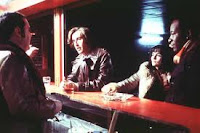
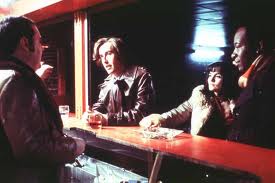
 was a totally different film. I can't think now of what I was getting it confused with, but it certainly wasn't what I watched, which is why I put it off for so long. The story of the Manchester club and music scene in the late 80s and early 90s, the film primarily focuses on Tony Wilson (Steve Coogan), a journalist who becomes a budding promoter and club owner, brought up and down by his own hedonistic decadence and belief in himself, at the same time seeming to compromise the very vision he pioneered and propagated. Looking also at the rise and fall of bands such as Joy Division, Happy Mondays and New Order, it is a fascinating and very entertaining look at this time, filled with frequent fourth wall breakages to insert actual memories and commentary on the time. Director Michael Winterbottom and writer Frank Cottrell Boyce both work splendidly to create this masterful biopic of an era, as told through one man. 4.5 stars.
Right, I'm fairly well on record on not being Christian Bale's biggest fan, but this DVD was fanging about in the living room and I had nothing to watch and I kept hearing such great things about, and about his performance (I'd heard similar things about his showing in American Psycho, and we all know how that panned out...) I think the points given to him in The Machinist are for his weight loss, which yes, while demonstrating incredible commitment, also demonstrates a level of insanity - boy, that's going too far. And he still seemed like Christian Bale. Emaciated, but still him. An interesting tale of being haunted by your conscience, it might have played better if Fight Club hadn't done such a bang up job a few years earlier. I remember being a little scared in a few points, but I shit myself over anything. 2 stars.
Have I mentioned that I love Atom Egoyan's name? Yes, I think I might have here. His name will always draw me to his films. Of course, whacking Julianne Moore in there is going to go a long way towards me heading out to see it also. I liked The Sweet Hereafter, but not so much Chloe . It was fine, I guess, but it didn't grab me the same way. The family drama was all a little off. Moore was terrific, as always, but I didn't quite gel with Amanda Seyfried and Liam Neeson. I just don't think they quite worked. (Max Thierot was cute though...) And the cerebral nature of everything kept it all a little cool and distant - the white rooms and glass everywhere, I can see where it was going with the kind of sterile environment and how that plays against the drama within, but it was all a little too much. It was a fine film that could have been great but in the end I feel that it missed it because of lazy visual cues. 2.5 stars.
Man, I totally don't even know where to start with Aguirre: Wrath Of God . Werner Herzog is one crazy, crazy guy. Like, seriously. Nuts. Brilliant, but loopy. I definitely don't think I can contain all that is this film in such a nutshell. Klaus Kinski is the titular Aguirre in a South American expedition to find El Dorado. He takes charge, seizes power if you will, and leads his troops or whatever onwards against all common sense, coming under attack from all sides, until eventually his men are hallucinating and he is proclaiming himself the wrath of god whilst covered in monkeys. No, really. Herzog really laid the groundwork for many of his latter films with this one. Kinski is terrifyingly mad, Herzog is terrifyingly creative, and the film somehow works for it all. It's mental, absolutely mental, but such a riveting piece of filmmaking, and seemingly such an influence on films such as Apocalypse Now (I'm seeing it - anyone else?)(In looking back, that's another film I watched and didn't write up. Damn.) 4.5 stars.
This is a film I really want to spend time on. But I must be strong. Abbas Kiarostami is a genius, he really is. I really enjoyed Close-Up, I loved loved loved Taste of Cherry, and now I really liked Ten as well. His is an oeuvre I really need to explore in much more depth, and repeatedly. Here, he has ten episodes of customers (or a son) in the passenger seat of a van, driven by their psychologist, who is interacting with her as she drives them around Tehran. It's such a simple concept, all taking place within the car, but it is a masterclass in what can be achieved with so little, and so simply. It is truly beautiful and a wondrous look at the often ignored stories of the women in this part of the world, opening them up not as victims of repression but as people just like the rest of us. Without it ever feeling like that is what is going on. Truly marvelous. 5 stars.
The major thing I can say about Food, Inc. is that is has changed the way I eat. Literally. I pay so much more attention to it now. To where my produce is coming from. To its content. I'm shopping more at farmer's markets when I can, but when I can't I'm doing everything within my means to make sure I pay attention to the lessons learnt from this film. Because they are many. The film follows in the footsteps of other docos like The Cove that are truly terrifying, particularly affecting (I've only eaten salmon twice since watching The Cove, and I used to eat salmon a lot. And they don't even mention salmon!) I can't recommend it highly enough, but be prepared to be very challenged about your habits. As a look at the global food industry, it is a horrifying exposé. Overly didactic and preachy in parts, perhaps, but when dealing with a subject as important as this one, a little bit of ramming down the throat probably doesn't go astray. 4.5 stars.
I really didn't know what to expect when I picked up Werner Herzog's Oscar nominated Encounters At The End Of The World . I figured that I would end up watching an interesting and somewhat unique documentary about Antarctica, having learned from Grizzly Man that Herzog isn't your standard documentary filmmaker. I didn't expect to finish having experienced one of the most heartbreaking scenes I've seen on screen.
I'm sure anyone who has seen the film knows what I'm talking about. The suicidal penguin, the penguin who stands, seemingly momentarily confused, before choosing not to follow his fellow penguins and instead begin his solitary trek inland towards certain death. That lone penguin, scampering across the ice, wings outstretched and exaggerating that almost comically pathetic waddle. A black speck on a frozen ocean of white, perhaps deciding that enough is enough. And with Herzog's narration, with his particular views on humanity behind it, the scene is devastating, poignant and all too human.

Herzog took his camera and a cinematographer to McMurdo, the American outpost in Antarctica, a town Herzog describes in no uncertain terms as fundamentally depressing. He outlines what his film is going to be about - it won't (despite the above reference) be another film about fluffy penguins. He is concerned with humanity, with the people who are drawn to this lonely, desolate continent at the bottom of the world, with why they are there, what stories they may have to tell and how they survive so far from... well, everything.
He takes an incredibly unique and interesting view. He doesn't overly judge the people (though his dry commentary does often give some indication as to the humour he must feel regarding some of the personalities he encounters), simply allowing them to tell their stories, and contrasting them to the setting they are within. This setting is not merely the unattractive town, but the stunning beauty of Antarctica we all remember from films such as that one about the fluffy penguins. Herzog also ventures into the water, however, and not merely for the seals (though the sequence on their calls immediately makes me think of The Cove, which will be coming up shortly here...) but also to look at the beauty of single-cell organisms being newly identified constantly, forming beautiful, artistic shapes, with discussions on their intelligence. Herzog invariably manages to bring all of these natural wonders back to analogies about humanity, a feat that cannot be taken lightly and which proves ultimately incredibly interesting.
Yes, a lot of the film feels a little like pop psychology, but the insights and postulations are thought out and presented by Herzog as options rather than conclusions, opening a dialogue with the audience and allowing the viewer to completely fall into the film, emotionally and intellectually invest rather than simply passively enjoy. I left the film affected, though I couldn't begin to explain how. Thinking back on the film now it somehow has more weight than other films, it lies heavier on my body than most that I have seen. Similar to an incredible and powerful drama, which renders you paralysed and forces you to contemplate everything about and around yourself, Encounters At The End Of The World isn't a light film, despite its ostensibly light matter. It is far from depressing, in fact it is very enjoyable, but expect it to hit you far deeper than you might have thought. 5 stars.