was a blast from left-field for Lynch, being, as it were, a straight story. Simply, it is the story of Alvin Straight, an old man who travels six weeks on a ride-on lawnmower to visit his dying estranged brother. Going blind and with only minor use of his legs, it is a heartwarming story of tenacity and family, and the personal rewards that come from doing something everyone says you can't. Richard Farnsworth was Academy Award nominated for his role, and was backed up very well by Sissy Spacek as his mentally disabled but very bright and caring daughter. A beautiful story well told, and a surprising entry into David Lynch's catalogue, further cementing his 'great' status. 4 stars.
 was another floating around the living room when I didn't have anything to watch, and I'd heard something about the remake in the preceding few days, so I thought I'd check it out. And it was quite good. A very young Richard Attenborough takes on the lead role of Pinkie in this inter-war crime film set in the eponymous English seaside town of Brighton. Pinkie is the precocious leader of his gang, showing very little fear in the face of anything that comes his way, who marries beautiful waitress Rose (Carol Marsh) to keep her quiet. As he starts to lose his grip on his gang and on the Brighton scene, he becomes more and more desperate and violent. Attenborough is terrifying in his role, precipitating a long and fruitful career both in front of and behind the camera. The remake (or should I say readaptation of Graham Greene's source novel) doesn't seem to be getting the same props as this 1947 production, so it's well worth checking out. 4 stars.
Ah, Harmony Korine and Lars von Trier. Dogme 95 was previously explored here, and looked at Korine here. Korine (uncredited) was writer and director on Julien Donkey Boy
 , the sixth entry in the Dogme 95 movement, about a severely dysfunctional family comprised of undiagnosed schizophrenic Julien (Ewen Bremner), his sister Pearl (Chloe Sevigny) who is also carrying Julien's child, his brother Chris (Evan Neumann) and deranged father (Werner Herzog - brilliant.) It's a wholly disturbing film complete with the Dogme look of verging-on-amateur, though the gravity of the story and depth of the performances ensures you're never fooled into believing this is anything but the real thing. Korine has a way of making films that are quite physically unsettling, and I find them often quite hard to sit through, though that isn't to take away from the power of his stories. 3 stars.
 powered into the Oscars with five nominations, including for both Foreign Language Film and Best Picture, taking home both the former and Best Editing. A not-so-subtle indictment of the Greek government at the time (though officially a work of fiction, I believe, with a starting disclaimer that any resemblance to real life is entirely deliberate), the film examines judicial and governmental moves to silence a burgeoning leftist movement in the unnamed country (again, definitely meant to be Greece, though the film was primarily shot in Algiers and is in French...) It's a brilliant piece of filmmaking, throttling the viewer with its viewpoint and forcing your engagement every step of the way. I'm not familiar with the rest of Gavras' work, but I'm definitely keen to rectify that. 5 stars.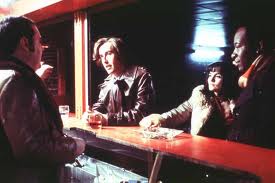
 was a totally different film. I can't think now of what I was getting it confused with, but it certainly wasn't what I watched, which is why I put it off for so long. The story of the Manchester club and music scene in the late 80s and early 90s, the film primarily focuses on Tony Wilson (Steve Coogan), a journalist who becomes a budding promoter and club owner, brought up and down by his own hedonistic decadence and belief in himself, at the same time seeming to compromise the very vision he pioneered and propagated. Looking also at the rise and fall of bands such as Joy Division, Happy Mondays and New Order, it is a fascinating and very entertaining look at this time, filled with frequent fourth wall breakages to insert actual memories and commentary on the time. Director Michael Winterbottom and writer Frank Cottrell Boyce both work splendidly to create this masterful biopic of an era, as told through one man. 4.5 stars.