There are three films from 1990s Australian cinema that people seem to keep coming back to when referring to that little renaissance that occurred in the first half of the decade, when the films seemed to not only be good, but also to connect in a major way with audiences both locally and internationally. They were referenced in the early noughties when films like Lantana, Moulin Rouge! and The Bank came through, and will be referenced more and more over the next 12 to 24 months after such successes as Samson And Delilah, Mao's Last Dancer and Bran Nue Dae. These three films also seemed to birth some of the brightest stars to come out of Australia from that period - even though some of them were known before, this cemented them in the eyes of the world.
We had Strictly Ballroom from 1992, which won at Cannes, BAFTA, Toronto and was nominated for a Golden Globe. Sure, none of the actors from the film went on to anything major, but the director, some guy named Baz, seems to have done pretty well for himself. We had Muriel's Wedding (it's Mariel...) from 1994, which was a BAFTA and Globe nominee and gave us Toni Collette and Rachel Griffiths and whose director, P.J. Hogan, went on to films such as My Best Friend's Wedding.
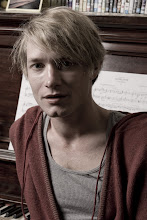
And then there was this one, The Adventures Of Priscilla: Queen Of The Desert, also from 1994, which I'm sure is in no small way responsible for Hugo Weaving's subsequent successes, as well as reminding everyone that Guy Pearce is not only hot hot hot, but also a terrific actor. This last also gave us the only Oscar recognition from these three films (yes, in craft, but we'll take what we can get thank you very much.)
Priscilla is the unlikely story of three drag queens from the Imperial Hotel in Sydney (when is that ever going to open again??? Seriously, unless it's finally reopened in the last couple of months, it has been closed for, what, two years for renovations. Or three years. A hella long time, whatever) taking a road trip through the Australian outback on a bus named Priscilla, heading to a residency in Alice Springs. Weaving, playing Tick, and Pearce, playing Felicia, are joined by aging transexual Bernadette (Terence Stamp) as they drink, drug and joke their way across the country, encountering bigots, fans, flies and fearsome terrain. When their bus breaks down they get down with the local Aboriginies for my favourite disco classic rendition in the fabulous soundtrack, Gloria Gaynor's I Will Survive dance routine accompanied by didgeridoos, before finding themselves rescued by the kind and non-judgmental Bob (Bill Hunter), who gets them on the road again before deciding to accompany them to Alice. As they go along they meet local hostility towards homosexuality (still rampant in rural Australia - the hostility, not the homosexuality) and secrets are spilled, meaning much more awaits them in Alice Springs than most people expected.
Technically, it's not a terrific film. The editing is a little sloppy, the direction a little hammy, and the script has some decent sized holes in it. What wins for this film and will forever leave it in my head and my heart as a brilliant classic are the soundtrack of old ABBA hits, the incredible costumes by Oscar winner Lizzy Gardiner and Tim Chappel, and the brutally honest portrayals by the three leads. Tick is scared of what awaits him but determined to keep up appearances, Felicia is camp and over the top but hiding sadness and fear inside, and Bernadette is the older, wiser sage, delivering advice and words of warning. But through it all, they want to have fun every step of the way.
Brilliant one-liners and production design from Owen Patterson abound, making this a truly and incredibly quotable film. Well worth checking out if you haven't seen it already, and if you have, I'm sure it is one that is well overdue for revisiting. 5 stars (despite the holes, it is a great achievement.)
Showing posts with label Guy Pearce. Show all posts
Saturday, 20 March 2010
Wednesday, 6 January 2010
I Have This Condition.
If you were creating your own top 100 list of the last decade's best films, but you had put a restriction on yourself that you could only have one film by any one director, would you pick Memento or The Dark Knight as Christopher Nolan's best work? The Dark Knight was a phenomenal film, mastering the comic book adaptation and pushing it so much further, with such texture and depth of performance, but still...
Memento made a lot of noise back in 2000, but for some reason that noise didn't equate to much more than a handful of critics awards, primarily for the screenplay (there were two Oscar nods, for editing and the screenplay, but nothing bigger.) As always, looking back, we wonder why. It's box office wasn't terrible either, but it should have been better - Guy Pearce had quite a name for himself back then, I'd argue more than he does now (though he seems to have a LOT of work on his plate at the moment.)
It's an incredible film, we all know that. We've all known that for years. For those who don't know it, just go out and hire it or buy it or something. The film plays forwards and backwards simultaneously, so the film ends at the middle of the story. It's so darned smart it hurts. You've got to concentrate in order to follow it, to try and remember what happened at the start of the previous 'running-backwards' scene so you don't lose what the whole film is about. Like Lantana, it doesn't treat the audience like children - but the work (it's not really that hard, the film just drags you right in there) really pays off.
Guy Pearce (someone I've always thought was amazing - if you want a total contrast of performance, go and get Priscilla: Queen of the Desert. Another great film (we'll discuss technical merits at another time) with a very different performance from him) turns in an incredible performance as the memory-challenged Leonard, going after the killer of his wife. The twists and turns that take him to the ending are fantastic. The supports (mostly Carrie-Anne Moss as a manipulator and Joe Pantoliano as a friend - or is he?) are solid. Christopher Nolan's direction is terrific. The script - wow. Wally Pfister, who shot TDK, does less flashy but just as effective work here.
It's 5 stars all over the place. I knew there was a reason I revisited this picture.
hawt.
Memento made a lot of noise back in 2000, but for some reason that noise didn't equate to much more than a handful of critics awards, primarily for the screenplay (there were two Oscar nods, for editing and the screenplay, but nothing bigger.) As always, looking back, we wonder why. It's box office wasn't terrible either, but it should have been better - Guy Pearce had quite a name for himself back then, I'd argue more than he does now (though he seems to have a LOT of work on his plate at the moment.)
It's an incredible film, we all know that. We've all known that for years. For those who don't know it, just go out and hire it or buy it or something. The film plays forwards and backwards simultaneously, so the film ends at the middle of the story. It's so darned smart it hurts. You've got to concentrate in order to follow it, to try and remember what happened at the start of the previous 'running-backwards' scene so you don't lose what the whole film is about. Like Lantana, it doesn't treat the audience like children - but the work (it's not really that hard, the film just drags you right in there) really pays off.
Guy Pearce (someone I've always thought was amazing - if you want a total contrast of performance, go and get Priscilla: Queen of the Desert. Another great film (we'll discuss technical merits at another time) with a very different performance from him) turns in an incredible performance as the memory-challenged Leonard, going after the killer of his wife. The twists and turns that take him to the ending are fantastic. The supports (mostly Carrie-Anne Moss as a manipulator and Joe Pantoliano as a friend - or is he?) are solid. Christopher Nolan's direction is terrific. The script - wow. Wally Pfister, who shot TDK, does less flashy but just as effective work here.
It's 5 stars all over the place. I knew there was a reason I revisited this picture.
Wednesday, 30 December 2009
War Is A Drug.
Glad I got Borat out of the way, now I can move onto something I really liked.

I'd heard nothing, absolutely nothing about The Hurt Locker on its initial theatrical release. Not a word. Then it started popping up at In Contention as an awards contender. Then the US critics awards started coming through, and it was every.where. Literally. LA, NYC, NBR, dozens of other wins and nominations. Everywhere. Three Golden Globe nods. Truly. If critics awards meant anything to Oscar (which they don't - re: The Dark Knight) then The Hurt Locker would be the one to beat. It's definitely a lock in the 10 film Best Picture category (and would also be in the old five film system) but I think Avatar is looking to be the whirlwind at the moment. Precious is gone.
Anyway, this isn't an Oscar entry. This is all about The Hurt Locker.
Kathryn Bigelow is an interesting director, in that she is a female director making, for all intents and purposes, male films. War movies. Action pictures. Surfing films. I can't think of another woman like her. But, what I love about women directors, and what comes through in The Hurt Locker, is that she isn't a man. She doesn't follow that testosterone-only format. Within the brutality and staunch masculinity of war (and remember, this is her portrayal here. Yes, a man wrote the film, but she is showing an army of men - it may not be 100% accurate to reality, there are females on the frontline, but that's what is on our screens) there is a gentleness and masculinity that most male directors don't care to explore. The guys are out there on their own day after day shooting at people and witnessing death and destruction - they're going to get fucked up by it somehow. If they don't, well, they were fucked up to begin with. Male directors have a tendency to clog it up with emotion during limited episodes within the broader film (Saving Private Ryan) or just put in bigger and better explosions to mask emotion or provide for an outlet for revenge (I don't have to feel bad anymore because look at how big that explosion is! We got them good!) What Bigelow does is much more subtle. Without once ever compromising the military masculinity of her characters, she allows them their moments of weakness. Without needing them to burst into tears and cry for their mothers, she lets us look inside and see that, beneath the bravado, they are afraid. And this is what makes this film so damn powerful.
Staff Sergeant William James (Jeremy Renner) is a bomb technician, sent into Irag to join a division who have recently lost their leader (played briefly but brilliant by Guy Pearce). James is all gung-ho and live for the moment, outwardly afraid of nothing, seemingly invincible - or incredibly lucky. Coming across a huge bomb in the back of a car, he takes off his protective suit (which has been shown to do nothing at much further distances anyway), saying if he's going to die, he's going to be comfortable. At the beginning, this doesn't sit well with Sergeant JT Sanborn (Anthony Mackie), who is below him in the unit. Sanborn wants to get out alive, and he wants everyone he is with to get out alive, and James' reckless behaviour from the moment he joins the unit imperils that. Sanborn is counting down the days until he gets to go home - James is counting up the bombs he has disposed of.
Their relationship (which is the core of the film) changes, however, and quickly, as the film goes on. Sanborn discovers a box under James' bed, filled with bits and pieces of bomb equipment - this is the 'hurt locker' of the title. James is collecting bits and pieces of bombs. The locker is full of things that could have killed him. And then, when the unit stumbles across an undercover unit in the desert (lead by Ralph Fiennes) they are forced to fight for their lives under a hot sun, exposed, wounded and scared. James proves himself a damn good leader, a compassionate soldier, extremely good under the pressure dealt to them. The delicacy of collecting bomb parts and the simplicity of passing juice boxes under the hot desert sun combine with so many other nods and nuances to create this extremely well rounded character, played to absolute perfection by the hitherto little-known Renner.
Supports are excellent, primarily from Mackie, his second in the last three films I have watched (with Half Nelson the other day.) It's never made as simple as Sanborn hating James - Sanborn has to follow James as his superior, and respects James for his obvious talents and bravery. And Mackie has to deliver these conflicting emotions under the cover of respect for command, not stepping out of line, and not going too far when hair is allowed to be let down. It is, again, the little flashes, the moments, that are pitch-perfect and, in a split second, tell you so much. Here's hoping people start to sit up and realise that he holds his own against the formidable lead performance.
As for the rest of it, it's all pretty much perfect. I can't think of a thing to fault. The cinematography by Barry Ackroyd (who's responsible for a hell of a lot of Ken Loach work) is sublime. It's not showy, it doesn't do anything it doesn't need to do, but when it does show you something it shows you everything you need to now. Like the performances, it is subtle, but the flashes are instants of immediate clarity. And the script, well, after all else that has been said if you need me to praise the script you need your head read. Mark Boal has done extraordinary things here to create a tight script without any real sense of artifice or superfluity. Score? Check. Editing? Double-check. Design? Check check check. All of it terrific.
Really, why don't films like this come along more often? And when they do come along, why don't they create more of a wave? It's the second film relating to war (though this one is directly about war, rather than the impacts at home) after Stop-Loss that I have liked and has been directed by a woman. Maybe this is what is missing here. More women talking about war.
5 stars. Excellent. Very highly recommended. The more I think about it, the more I'm liking it.
Subscribe to:
Posts (Atom)